5 ways virtual therapy actually helps (and why AI can't do this part)
Virtual therapy isn't a downgrade from in person, it's just a different room. Here's what actually changes when therapy happens on a screen, and why a chatbot is not a replacement for the real thing.
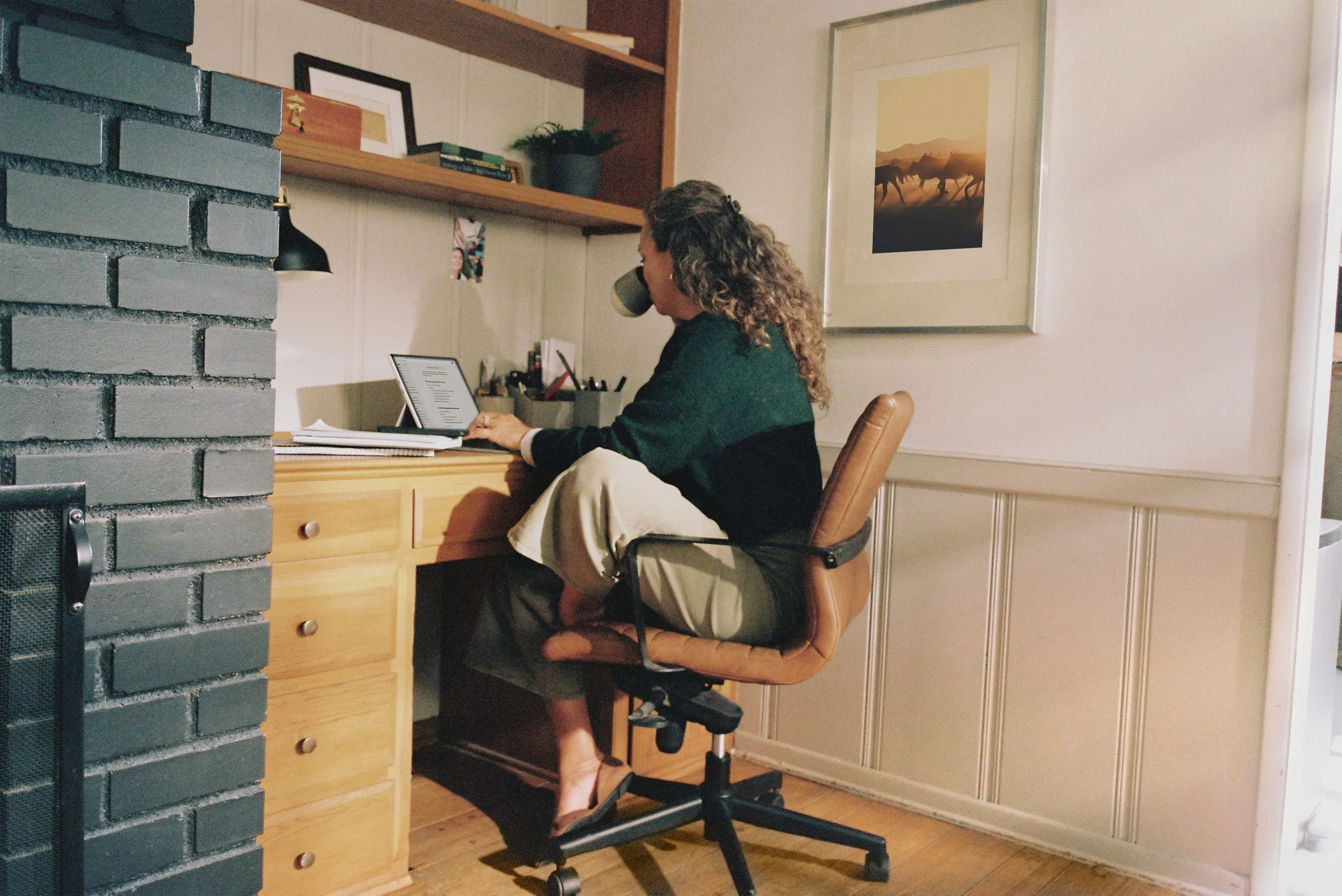
Let me address the elephant in the room. Yes, therapy over video is real therapy. No, it is not a watered down version of "real" therapy. And no, chatting with an AI at 2 a.m. is not the same thing, even though it might feel like it in the moment. Let's get into both.
You show up as your actual self, in your actual environment - There's something useful about doing this work from your own couch, in your own space, with your own dog interrupting occasionally. You're not performing "client in a waiting room." You're just you, in the environment where your actual life happens. That context matters. A lot of what we work on shows up in your daily environment, not in a sterile office fifteen minutes from home.
It removes the biggest barrier: getting there - The single biggest reason people put off starting therapy is logistics. Finding a therapist near you, taking time off work, sitting in traffic, sitting in a waiting room. Virtual therapy removes almost all of that. You can do a session on your lunch break, between meetings, or right after you get home. Less friction means you're actually more likely to keep showing up, and consistency is what makes therapy work in the first place.
It widens who you can actually work with - In person, you're limited to whoever happens to practice near you. Virtual therapy means you can find a therapist whose specialty and style actually fit you, not just whoever has an office in your zip code. That matters a lot if you're looking for someone with specific experience, like substance use or trauma work, instead of settling for whoever was available.
It's easier to be honest - This one surprises people. A lot of clients say they find it easier to say the hard thing over video than they would sitting three feet away from someone in a room. There's a little bit of distance that, for a lot of people, actually lowers the guard instead of raising it. You're in a familiar space, which can make an unfamiliar conversation feel more manageable.
It's sustainable - The best therapy is the therapy you actually keep doing. Virtual sessions fit into a real, busy, unpredictable life in a way that's much harder to pull off with a commute on each side. Sustainable access is not a lesser version of care. It's what makes ongoing care possible at all.
Now, about AI.
I get why it's tempting. It's available at 3 a.m. It doesn't judge you, or at least it doesn't seem to. It's free, or close to it. And it will respond to whatever you type, instantly, every time.
Here's the problem. An AI chatbot cannot actually track your history the way a therapist does. It doesn't remember that you mentioned your dad three sessions ago and it doesn't notice the pattern in how you talk about him now versus then. It has no ability to hold you accountable to something you said you wanted to change, because it has no relationship with you over time, no matter how many messages you send it.
It also can't read a room. Therapy isn't just information delivery. A huge part of the work happens in tone, pacing, silence, and the kind of gentle pushback that only lands because there's an actual relationship behind it. An AI will validate almost anything you tell it, because that's largely what it's designed to do. Constant validation feels good in the short term and can genuinely get in the way of the kind of honest challenge that actually creates change.
And there's a real safety issue here too. If you're in crisis, an AI is not equipped to recognize the nuance of that, escalate appropriately, or hold the kind of responsibility a licensed clinician is trained and legally obligated to hold. That's not a small gap.
None of this means AI is useless. It can be a fine tool for organizing your thoughts before a session, or journaling when you don't have the energy to talk to a person. But it's a tool, not a therapist, and it's worth being honest with yourself about which one you actually need in a given moment.
If what you need is a real, ongoing relationship with someone who remembers your history, notices your patterns, and will push back when it matters, that's what therapy is for. Virtual just means it fits into your life instead of asking you to rearrange your life around it.